We had perfect weather this evening to sit outside on the patio of the Felton’s for this wonderful tasting of Italian Sangiovese organized by Chris Wood, and the Italian food paired well with the wines for the evening.
As for the results, we had an unusual situation where the top 3 wines were only separated by 2 points, and the remaining wines had at least 27 more points. Bottle #4, the 2014 Fontodi ($60), was the top wine and the #2 wine was the 2015 Castello di Volpaia Coltassala ($45), while the #3 wine was the 2015 “Terrazze” Castagnoli ($43). At the tasting, the results for the #2 & #3 wines were announced differently, but when preparing to post the results, I noticed someone had voted twice so after removing the duplicate vote, only the rankings for the #2 & #3 had changed. For full descriptions and rankings of all the wines, click here: 2019-09 Italian Sangiovese Wine Descriptions
Here’s the voting results by individual tasters: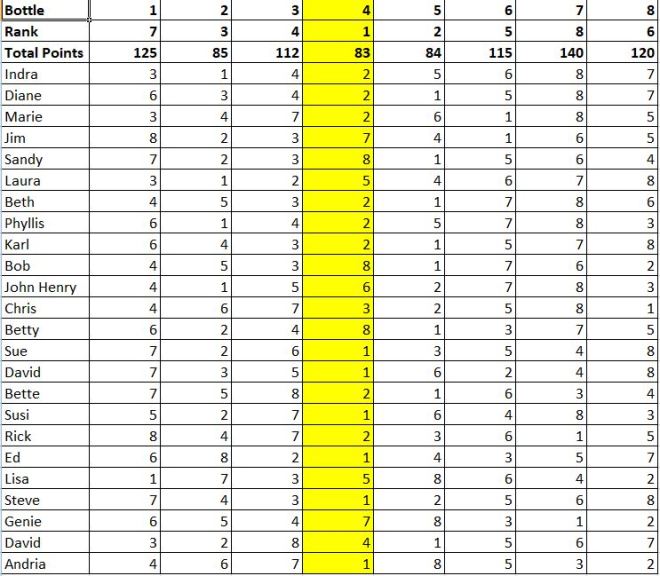
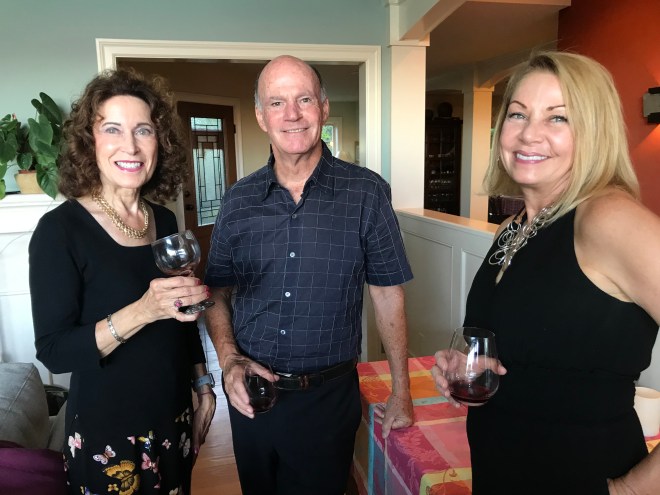
The hosts: Mignone & Chris Wood
Panoramic view of all the guests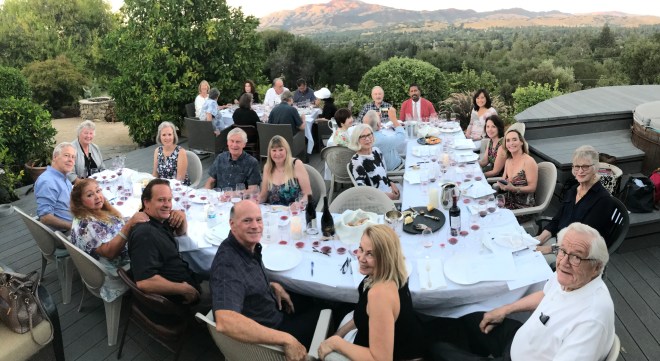
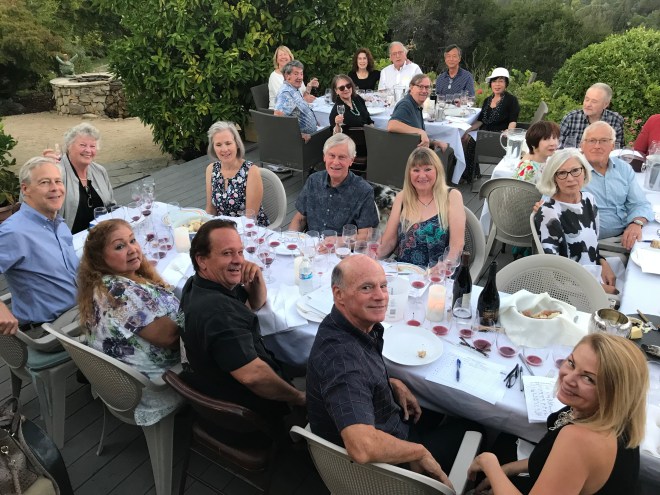
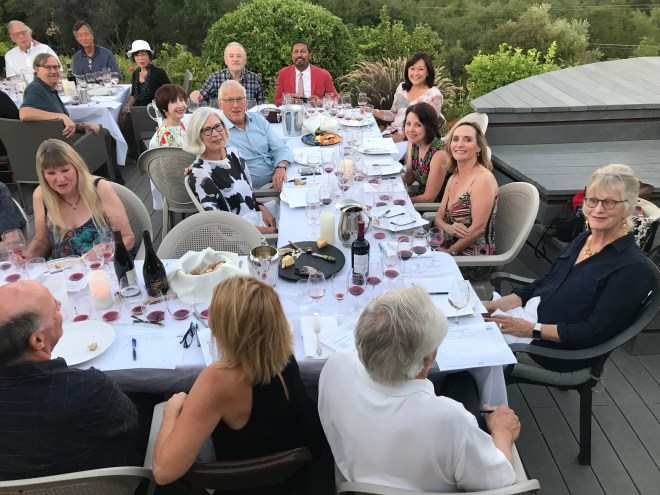
Credit for the photographer Bob Simoni taken by Indra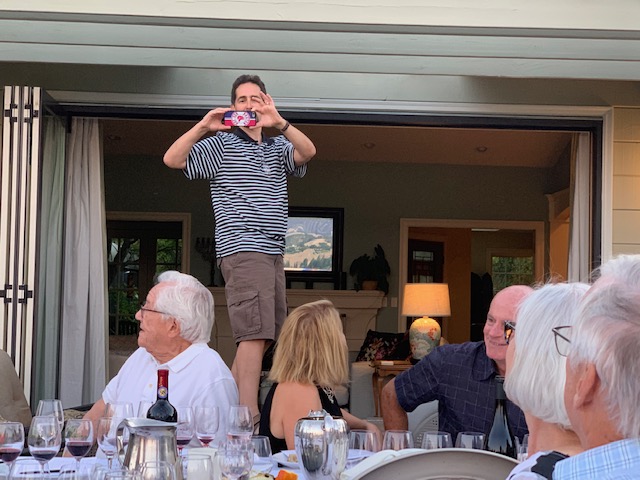
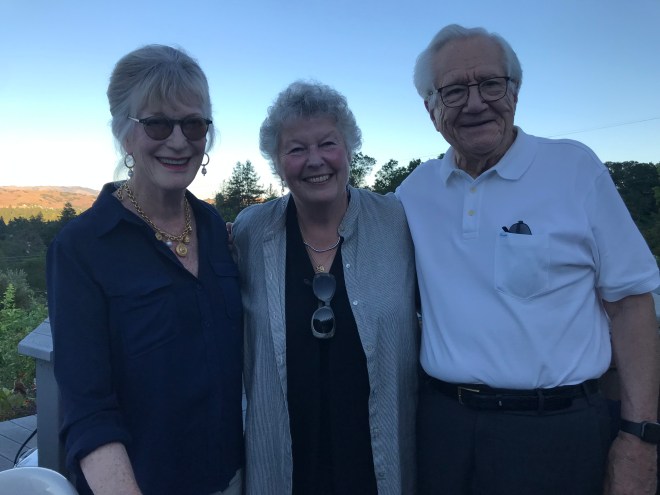
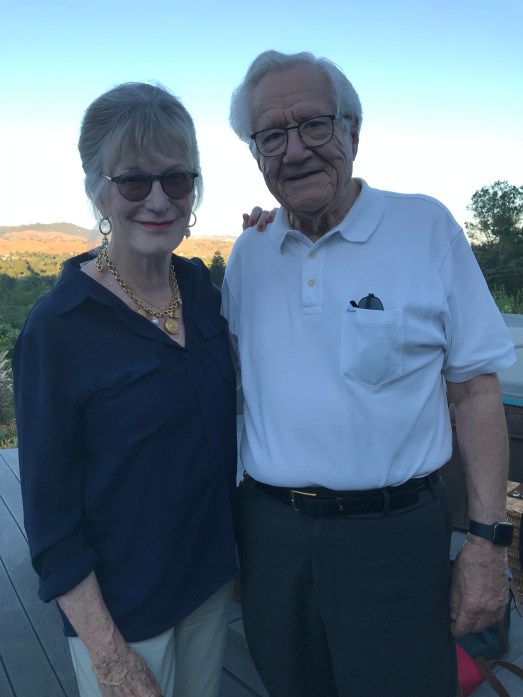
Thanks to Diane Y. for this wonderful photo of the view from the back deck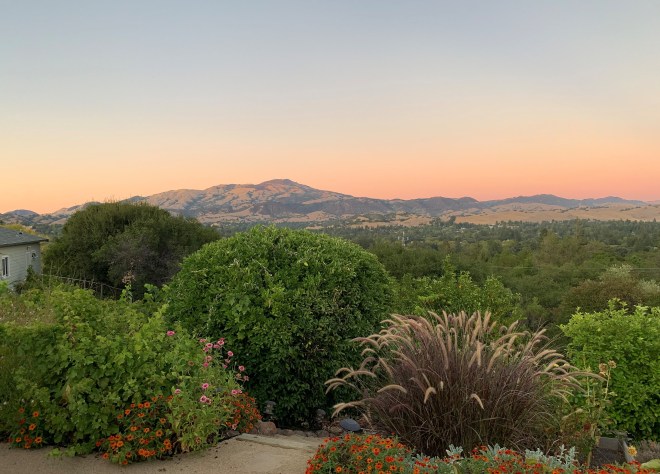
Best dressed man goes once again to Indra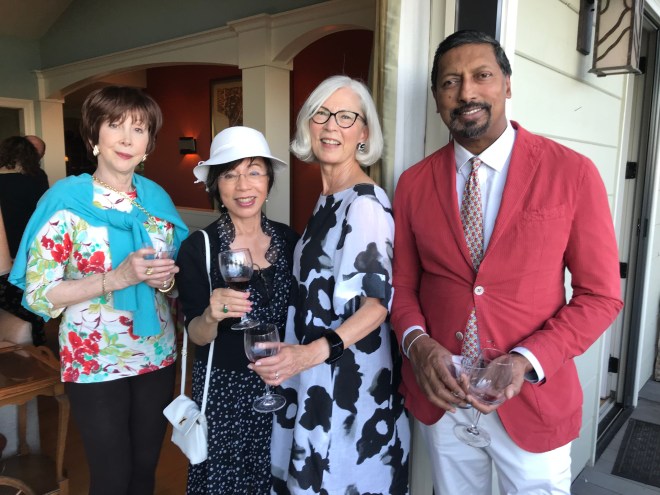
Best legs goes to Shelly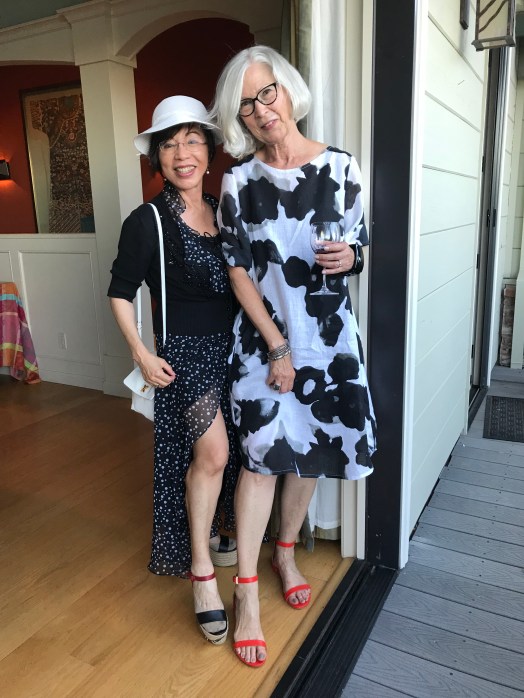
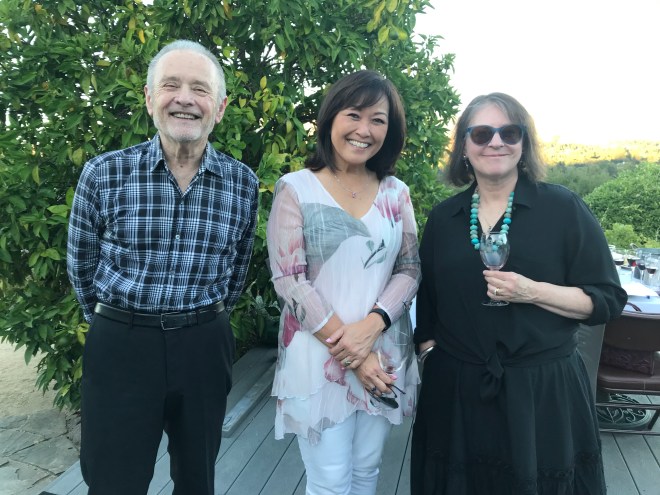
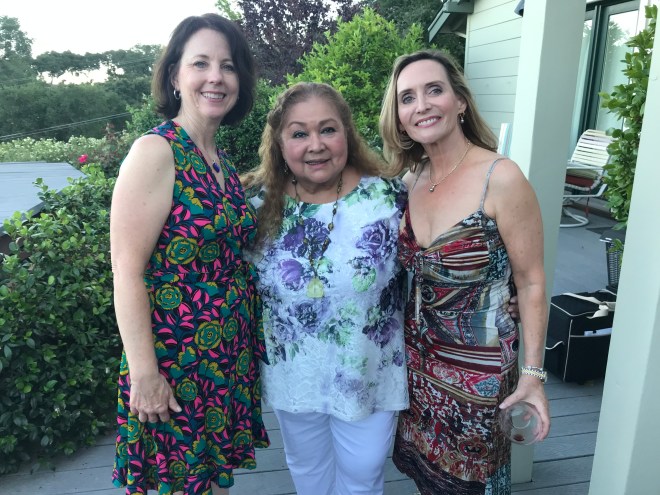
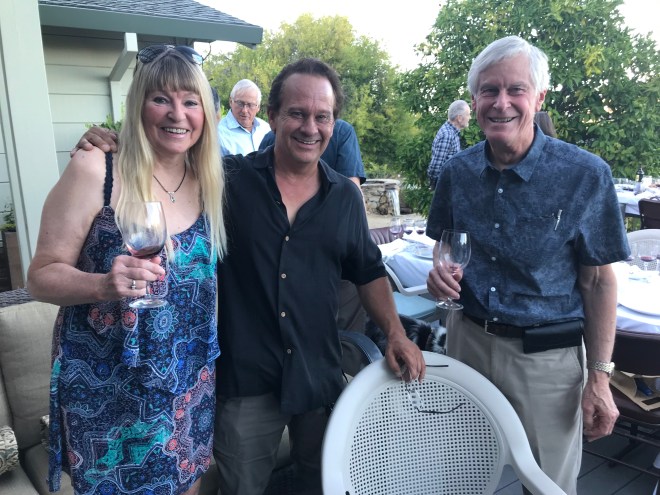
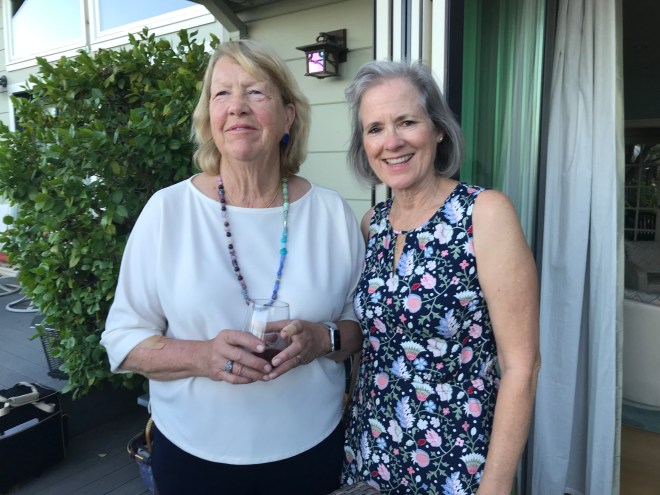
Best photo bomb also goes to Indra :-0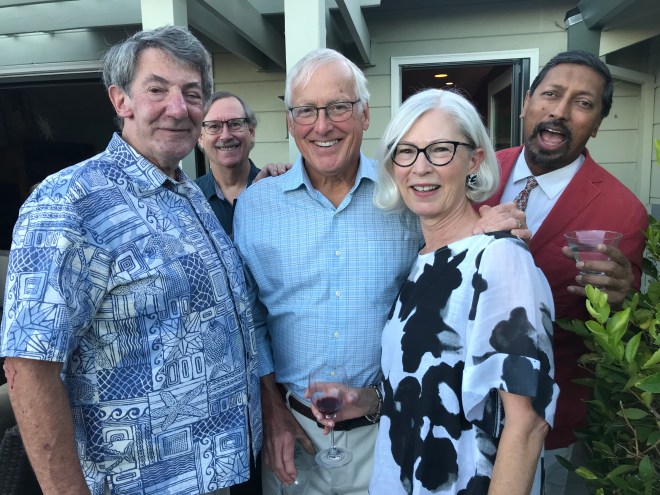
——————————————————————————————————————————————
ANNOUNCEMENT
WHEN: Saturday, September 14 at 6:00 p.m.
WHERE: Jim and Bette Felton’s home, Danville.
WINES: Chianti Classico Riserva – We will taste the current vintages of the top producers.
HOSTS: Chris & Mignone Wood and Jim & Bette Felton
FOOD: Catered by “A Loveable Feast”. The food is matched with these Sangiovese based wines. Think: Antipasti Platter, Caprese Salad, Caesar Citrus Salad and Fettuccine Bolognese (gluten free, naturalmente!)
Please RSVP (“YES” or “NO”) as soon as you can. While Members and Preferred Guests can wait until 10 days before the tasting (September 4) to reserve a seat, please reserve sooner so we can give guest enough time to make plans to attend. So, reserve early!
THE WINES
We will taste the Sangiovese grape as it is produced in the Chianti Classico Riserva style and grown in the specific geographic area of Chianti in the Province of Tuscany, which lies between Florence on the north and Siena on the south (approximately 100 miles distance).
Chianti Classico Riserva is the ultimate in Chianti Classico style. It is generally made from the producer’s best grapes. It is more concentrated and age worthy than Chianti Classico. It must be aged a minimum of 27 months (2 years and 3 months) before being released (as compared to Chianti Classico, which is aged a minimum of 1 year).
The Chianti Classico Riserva wines must have at least 80% Sangiovese grapes grown in the geographic region. The other 20% may also be Sangiovese. Up to 10% can be the red Tuscan grape, Canaiolo. Up to 6% may be the local white wine grapes of Trebbiano and Malvasia. Other red varietals may constitute up to 15% of the blend. These blends have recently been varietals Cabernet Sauvignon, Merlot and Syrah to soften the finished wine. Chianti Classico Riserva wines must have at least 12.0% alcohol.
The
Sangiovese grape is known as “a bit chameleon” because, in part, it easily alters it genetics to fit the environment. (
Winefolly.com – 6/2/19.) There are many different mutations of the variety all over Italy, which results in very different tasting wines. The range of flavors is exemplified by the styles of the
Rosso wine (delicate floral strawberry aromas) to the
Brunello di Montalcino wine (intense, dark and
tannic). Many of the better received Chianti
Classicos are made from
Sangiovese Grosso clone. Of the estimated 175,000 acres of
Sangiovese plantings in the world, all but 20,000 are in Italy. (In Italy, it is grown in Tuscany,
Umbria and
Campania. Corsica is the next largest planting of
Sangiovese. There are ~2,000 acres in the USA and similar acreage in Argentina). It is less abundant worldwide than the
Mourvedre grape.
Tasting Chianti Classico Riserva: Chianti
Classico wines are “savory”. Their taste can range from very earthy and rustic to round and fruit forward. They tend higher in tannin (drying your mouth) and have an aroma and taste reminiscent of cherries and strawberries, “with more subtle notes of tomato”. (
Winefolly.com – 6/2/19.) Chianti
Classico tends to be
inexpressive in the front of the mouth; all of their action happens in the middle and rear. This is unlike most New World red wine. As between the Chianti Classico and Riserva, the Riserva is more resiny, earthy, viscous with more tannin and extraction. Chianti Classico Riserva is high in acidity, which makes it go very well with food that has a richness from oil and butter, cheese and braised vegetables and meats.
 Cellar Society of San Francisco